The Instructional Design Bottleneck: Where Training Stalls
18 October 2026 · 6 min read
The instructional design bottleneck is rarely a strategy problem. Approved training ideas stall in overloaded queues, slow reviews and rework until they're months old at release. For Australian RTOs, universities and corporate L&D teams, the useful question isn't "should we hire more designers?" It's "where does work actually get stuck?"
Why do good training ideas stall after approval?
Because approval is the start of the queue, not the end of the work. Once a request is signed off, it waits for a designer, then for subject matter expert (SME) feedback, then for compliance or leadership review, then for rework. Each wait is small. Together they add up to months.
A US viewpoint in Training Industry (28 August 2026) makes this case. Its argument is that training backlogs are often capacity problems, not strategy problems. It also warns that hiring more designers or buying new technology won't fix bottlenecks caused by overloaded workflows, slow reviews or inefficient handoffs.
Two caveats. The author leads a vendor, CommLab India, so this is a viewpoint rather than neutral research. And it's a cross-market source, not an Australian one. Even so, the framing is travelling: the Australian L&D Network republished a summary on 2 September 2026, describing L&D's real bottleneck as neither strategy nor ideas.
What does the Australian evidence say?
There's no Australian data on L&D request queues or turnaround times that we could find. Anyone quoting a measured national backlog figure is guessing. What exists is adjacent evidence about the people who do the work.
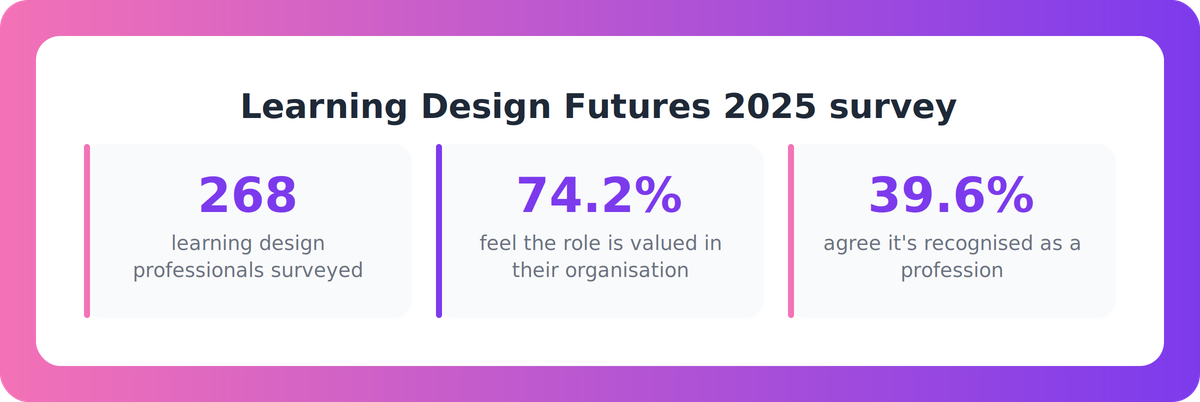
Learning Design Futures is a 2025 project from Monash, Wollongong and Tasmania universities with AITD. It surveyed 268 learning design professionals, mostly in Australia and New Zealand. We've only seen secondary commentary, not the full report, and the sample was self-selecting. It describes this group, not the whole workforce.
Within that group:
- 74.2% feel the role is valued in their organisation.
- Only 39.6% agree it's recognised as a profession.
That gap fits a backlog story: the work is wanted, but not well understood or resourced. To be clear, that's our inference. The survey doesn't say it.
Is the supply of designers part of the problem?
Probably, though the evidence is indirect. HCI Australia, a commercial publisher, describes a relatively small but highly skilled pool of instructional designers. It says workplace safety, privacy and ESG reforms have created bursts of demand, and that government and defence programs increasingly need security-cleared designers, who are scarce. That piece is older than our freshness window, so treat it as context.
Glassdoor Australia listed 349 instructional designer jobs in October 2026. That shows active hiring. It doesn't show backlogs.
For RTOs there's a familiar version of this. When training packages and units of competency change, or a reform lands, everyone needs updated content at the same time. A small specialist pool plus a demand spike is a queue.
Where does work actually get stuck?
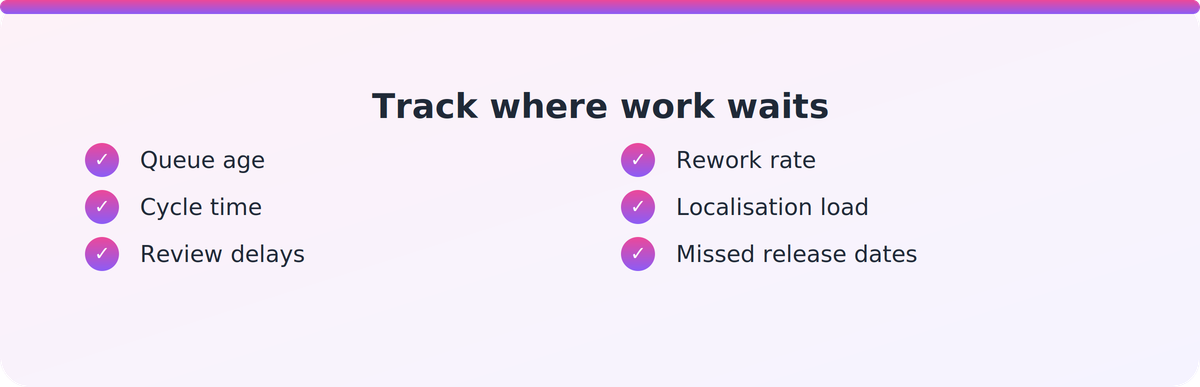
The Training Industry piece suggests tracking a handful of signals. They're simple enough to pull from a project tracker or even a spreadsheet:
- Queue age: how long approved requests wait before anyone starts.
- Cycle time: start to release, for each project type.
- Review delays: days a draft sits with SMEs, compliance or sign-off.
- Rework: how often drafts go back for major changes.
- Localisation load: versions needed for different roles, sites or audiences.
- Missed release dates: how often what was promised isn't what shipped.
Most teams track output (modules shipped). Few track waiting. Yet waiting is usually where the months go.
Can AI-assisted production shorten the queue?
It can shorten one part of it: the production step. It can't fix a review process that takes three weeks per draft.
Synthesia's AI in L&D Report 2026, which is vendor-sponsored, found about 87% of teams use AI for training and development. The top benefits were faster production (84%) and better learner experience (66%). Take the numbers as directional, not definitive.
The practical opportunity is in formats that are expensive to build the traditional way: role plays, simulations and coached practice. These usually need scripts, actors or facilitators, and long design cycles, so they get cut from the queue first. Tools that generate contextual scenarios in minutes change that maths. Supahuman's Nova is built around this idea, though any tool only helps if the surrounding workflow can absorb faster drafts.
Speed also moves the bottleneck. If production drops from weeks to hours, review becomes the constraint. Plan for that before you buy anything.
What should you do before hiring or buying?
Try this order:
- Measure waiting, not just output. Pick the six signals above and record them for one quarter.
- Find the longest wait. It's usually review or handoff, not design.
- Fix the workflow first. Fewer reviewers, clearer sign-off rules, defined SME turnaround times.
- Match the lever to the stall. Capacity gap: hire or contract. Production gap: automate drafts. Review gap: redesign approvals.
- Re-measure. If queue age doesn't fall, the lever was wrong.
Key takeaways
- Approved training ideas usually die in waiting, review and rework, not in strategy.
- No Australian data on L&D queue lengths or turnaround times was found, so treat this as reasoned argument from adjacent evidence.
- A 2025 survey of 268 learning design professionals found 74.2% feel valued but only 39.6% feel the role is recognised as a profession.
- Australia's designer pool is small and demand arrives in regulatory bursts, which makes queues likely.
- AI can speed production of role plays and coached practice, but review and handoff design decide whether the queue actually shrinks.
Our take
Most backlog conversations jump straight to "more people" or "better tools". We think that's backwards. Measure where work waits first, because the longest wait is rarely where the design effort goes. Faster production is a real gain, especially for practice-based learning that teams currently skip on cost. But it only pays off if your review process can keep pace with it.
FAQ
What is an instructional design bottleneck?
It's a point in the training production workflow where work waits longer than it takes to do. Common causes are limited designer capacity, slow SME or compliance review, rework and handoffs between teams. The result is that approved training ships late, or goes out of date before release.
Is there Australian data on training backlogs?
Not that we found. No Australian source quantifies L&D request queues or turnaround times. The available evidence is indirect: a 2025 Learning Design Futures survey of 268 learning design professionals, plus commentary on designer supply. A US article from Training Industry (August 2026) supplies the backlog framing.
Should we hire more instructional designers to clear a backlog?
Only if capacity is the confirmed constraint. Training Industry warns that extra hires or new technology won't fix bottlenecks caused by overloaded workflows, slow reviews or inefficient handoffs. Track queue age, cycle time and review delays first to see where work stalls.
Can AI reduce instructional design turnaround time?
It can speed up production. Synthesia's vendor-sponsored 2026 report found about 87% of teams use AI for training and development, with faster production (84%) the top benefit. But AI doesn't remove review delays, so the overall queue may not shrink unless approvals are redesigned too.
Why does this matter for RTOs?
RTOs work against training packages and units of competency, so content must be kept current as requirements shift. A small specialist designer pool and bursts of regulatory-driven demand can make queues likely. Knowing where work stalls helps RTOs decide whether to add capacity, change workflow or speed up production.